Are you a manufacturer that uses sodium bentonite in your production? You may already be aware how versatile it truly is.
Whether for foundry, ceramic, or civil engineering purposes, sodium bentonite is a basic requirement. But with so many good suppliers, how do you make the right choice?
To help you make the right choice, I have developed this comprehensive guide.
Let’s learn more about industrial bentonite selection and how you match its properties to your application.
What Makes Sodium Bentonite Special?
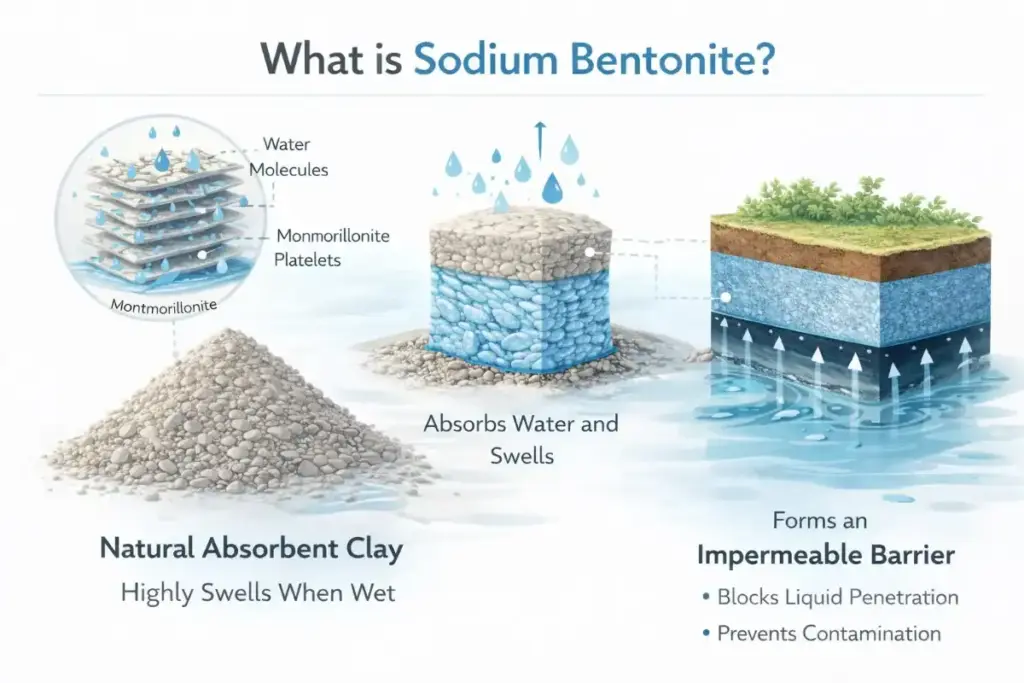
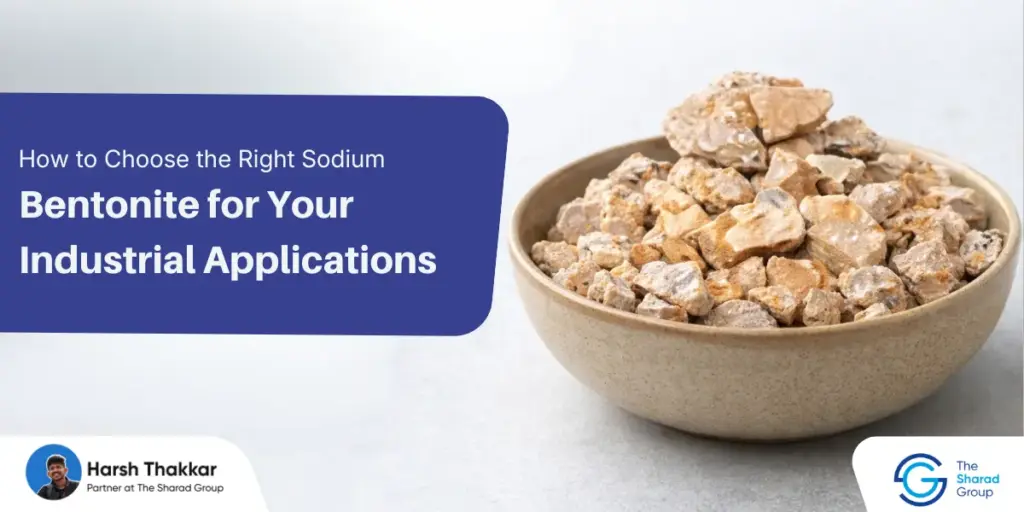
Not all sodium-based bentonite powders are made the same way. Why? It’s made from weathered volcanic ash, available at varying purities.
Sodium Bentonite also boasts a unique layered structure that allows water to enter its layers. This gives it its signature ability to swell upto 30 times its dry volume.
This swelling makes it an excellent binding agent for many applications. This includes usage in everything from drilling to ceramics.
Key Factors in Industrial Bentonite Selection
It is crucial that you select the right sodium bentonite for your industrial purposes.
Once you’ve identified the right technical grade, the next step is choosing a bentonite clay supplier that can deliver consistent quality and reliable documentation.
A core part of this selection process is understanding critical bentonite clay benefits, like:
1. Swelling Capacity
Since this is sodium bentonite’s most unique feature, it is also the one buyers often check at first.
Sodium bentonite can swell up to 20-30 times its original volume. This makes it great for usage as pond liners.
For essential foundry work, you require moderate swelling with better binding properties.
2. Particle Size and Distribution
Sodium bentonite powder comes in a variety of different particle shapes and sizes. This indicates how well a sample hydrates or mixes with other materials.
For drilling fluids, finer particles are preferred. These disperse faster and make drilling easier.
For foundry molds, you will need sodium bentonite in coarser grades. This will provide greater strength and structural integrity.
3. Chemical Purity
The chemical formula of Sodium Bentonite is directly linked to its performance. The critical components that you need to verify before making a purchase are as follows:
- Silica should be around 69%
- Alumina should be 14-15% on average
- Iron oxide needs to be as low as possible
- Sodium oxide can be around 1.85%
4. Viscosity and Gel Strength
Planning to use sodium bentonite for drilling or construction work? Ensure that you pay attention to its viscosity.
5. Thermal Stability
Foundry work often requires materials that remain stable at high temperatures.
Sodium bentonite is thus a great material to use for this industrial need. This is because it can withstand temperatures of upto 600°C.
It is often used to create molds for metal casting.
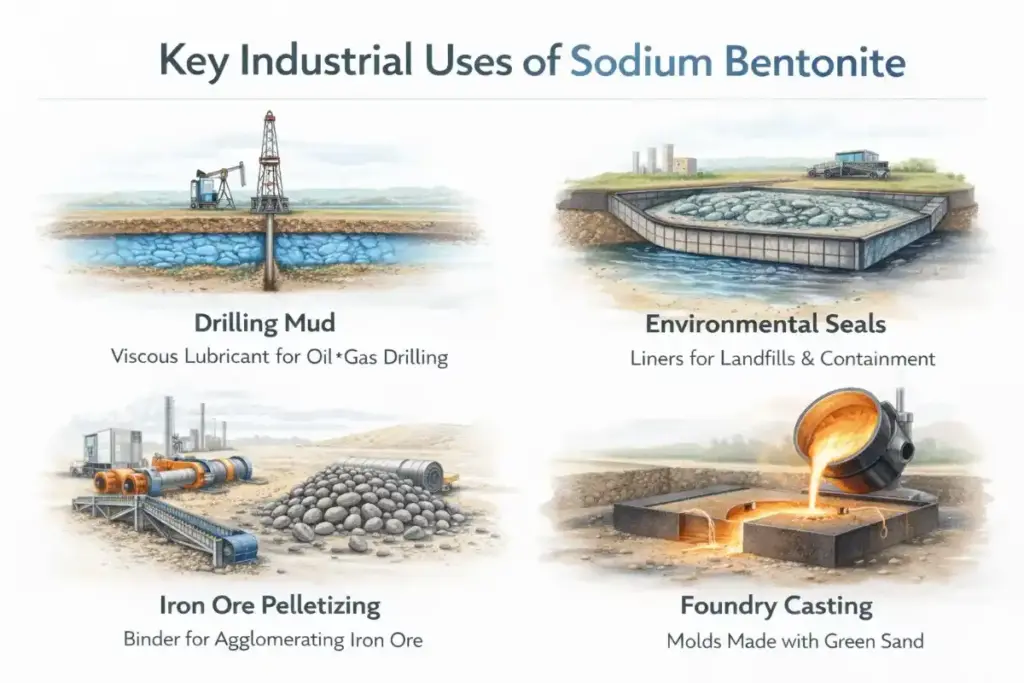
Uses of Sodium Bentonite Across Industries
Here are the best sodium bentonite uses based on particular industries.
| Industry | Primary Function | Key Properties Needed |
| Foundry | Binder for molding sands | Thermal stability, green strength, and consistent swelling |
| Ceramics | Improve plasticity and green strength | Fine particle size, whiteness, and low iron content |
| Drilling | Viscosifier and fluid loss control | High yield, thixotropic gel formation |
| Civil Engineering | Sealants, soil stabilization | High swelling capacity, low permeability |
| Iron Ore Pelletizing | Binder for pellets | Consistent quality, good binding strength |
Key Sodium Bentonite Requirements for Industrial Applications
Here are the main factors to consider while choosing the right sodium bentonite clay:
Bentonite for Foundry Applications
- High green strength before firing
- Good dry strength
- Better thermal durability
- Consistent swell index
Bentonite for Ceramics
- Higher whiteness with finer particles
- Low iron and titanium oxides
- Good adsorption capacity
Finding Reliable Bentonite Suppliers in India
India boasts abundant bentonite deposits. This is why there are many good Indian suppliers for this material.
During your search, ensure that you ask suppliers questions like:
| Question | Why It Matters |
| What is your swell index? | Directly measures swelling performance |
| Can you provide particle size analysis? | Ensures consistency for your process |
| What is the iron oxide content? | Critical for color-sensitive applications |
| Do you offer consistent viscosity batch to batch? | Prevents production surprises |
| What grades do you specialize in? | Shows industry expertise |
Conclusion
Selecting the right industrial bentonite doesn’t need to be complex. In essence, it is based primarily on selecting a supplier with high-quality output across different types of clay.
The key properties of sodium bentonite you need to look for while making your choice include:
- Swelling capacity
- Particle size
- Chemical Purity
- Thermal stability
For manufacturers seeking high-performance sodium bentonite with consistent results across all these factors, consider The Sharad Group.
The Sharad Group has over 60 years of industry experience. They have developed a global reputation for providing high-quality sodium bentonite for specific uses.
TSG is also a leading bentonite supplier in India. They are known for their consistency in every batch.
Searching for a trustworthy supplier of sodium bentonite? Get in touch with The Sharad Group and enjoy access to regular consignments satisfying your exact needs.
FAQs
1. What is sodium bentonite, and what makes it different from other clays?
Sodium bentonite is a unique clay that swells 15-30 times its dry volume when wet. Unlike other clays, this sodium-based bentonite powder has high swelling capacity, viscosity, and binding ability, making it ideal for foundry, ceramics, and drilling applications.
2. What are the main sodium bentonite uses in industry?
Sodium bentonite uses vary by industry. In foundries, it binds sand molds. In ceramics, it improves plasticity. Other uses of sodium bentonite clay include drilling fluids, pond sealants, and iron ore pelletizing. Each application requires specific properties from your bentonite powder supplier.
3. How do I choose the right bentonite for foundry applications?
For bentonite for foundry, look for high green strength, thermal stability up to 600°C, and a consistent swell index between batches. High-quality bentonite for foundry applications reduces casting defects and improves the surface finish of metal parts.
4. What should I look for in bentonite for ceramics?
When selecting bentonite for ceramics, prioritize high whiteness (minimum 80 units), low iron oxide content (under 2%), and fine particle size. Even small amounts of quality bentonite for ceramics dramatically improve plasticity and green strength.
5. How do I find reliable bentonite suppliers in India?
Look for bentonite suppliers in India that provide detailed technical data sheets, consistent swell index values, and particle-size analysis. Reputable bentonite suppliers in India will offer samples for testing and maintain batch-to-batch consistency. Consider logistics, packaging options, and their experience with your specific industry.